SOURCING & QUALITY
Clear requirements create more reliable sourcing decisions.
SemiVant supports industrial power component sourcing through a requirement-led review. We clarify the requested part, proposed source, material condition, inspection plan and available evidence before a customer makes a quotation or order decision.
Exact Part & BOMEOL & Hard-to-FindAlternative Screening

Sourcing Process
How we handle your enquiry
Four steps turn a submitted requirement into a defined sourcing response. Share what you know; we will flag missing details before proposing an option.
01 — SUBMIT
Share the available details
Share a part number, BOM or product photo, quantity, application and target delivery. Incomplete enquiries are welcome.
02 — REVIEW
Review the part and sourcing scope
Identify whether the request is for an exact part, an EOL item or an alternative; check the applicable manufacturer reference and sourcing route.
03 — ALIGN
Align the proposed offer
Clarify the offered condition, availability status, packaging, records, inspection requirements and any unconfirmed details.
04 — RESPOND
Provide a clear next step
Explain the proposed option, material limitations and the points requiring customer confirmation or engineering approval.
Pre-Quotation Review
We check the requirement and the proposed source.
First confirm what part is needed. Then review the proposed supplier and availability. A sourcing lead is not confirmed stock, and supply availability does not establish technical compatibility.
A · Requirement review
Product and application requirements
For an exact part or BOM, we verify the complete manufacturer part number, package, quantity and delivery target. Confirm any requested condition and supporting records.
- Complete manufacturer reference and package
- Quantity, priorities and individual BOM lines
- Application, destination and target delivery
- Required condition and available records
EOL and replacement requirements
For EOL or potential replacement, separate supply availability from engineering compatibility. Matching voltage and current ratings alone do not establish interchangeability; final alternative approval belongs to the customer’s engineering team.
- Electrical and dynamic characteristics
- Package, pinout and mechanical fit
- Drive, thermal and protection requirements
- Application topology and engineering approval
B · Source review
Review supplier qualification and stock availability for the proposed offer, not as a blanket claim for every product.
SUPPLIER CHECKS
Supplier qualification
The shared quality process reviews suppliers before their material is presented in an offer:
- Company verification: registration, address and trade references where applicable.
- Quality history: prior performance, returns and reported quality concerns.
- Documentation: available conformity, inspection, traceability or compliance records.
- Source type: authorized channel, OEM excess, qualified broker or open-market source.
INVENTORY STATUS
Stock availability
- Held Stock: physically held in a company-controlled facility; holding entity and location can be clarified for the offer.
- Verified Partner: stock confirmed with a qualified supplier and re-verified before shipment.
- Available to Source: identified within the network, subject to confirmation of quantity and condition.
- Sourcing Required: no confirmed stock; a search is undertaken against the requirement.
- No Current Offer: no suitable option is presently confirmed.
Certification status: The shared quality operation has published targets for ISO 9001:2015 in March 2027 and AS9120B, SAE AS6081 and ERAI membership in June 2027. These are targets in progress, not certifications or memberships currently held by SemiVant. Certificate numbers and issuing bodies should only be published once issued and applicable to the named entity.
SUPPLY CONDITIONS
What we confirm in a quotation.
Before an order is placed, distinguish the proposed part from the condition and evidence of its particular lot. These four checks are separate dimensions, not sequential quality grades.
01 — MATERIAL CONDITION
New / Original Request
Confirm the stated condition and manufacturer reference when new original material is required. Packaging alone does not establish authenticity.
02 — PACKAGING
Factory-Sealed Packaging
Confirm whether factory-sealed packaging is available for the quoted lot, and identify the seal, labels and packing format where requested.
03 — INVENTORY SOURCE
Excess / Non-current Stock
For excess or non-current inventory, disclose the source type, stated condition, date code, packaging and any relevant inspection limitations.
04 — LOT INFORMATION
Date Code & Traceability
State which date codes, lot identifiers or traceability records are available; disclose missing records before acceptance.
INSPECTION SCOPE & METHODS
Define the checks before choosing the test method.
First define the attributes to check; then agree on the appropriate methods and who will carry them out. The scope depends on the device, source risk and application.
A · What we check
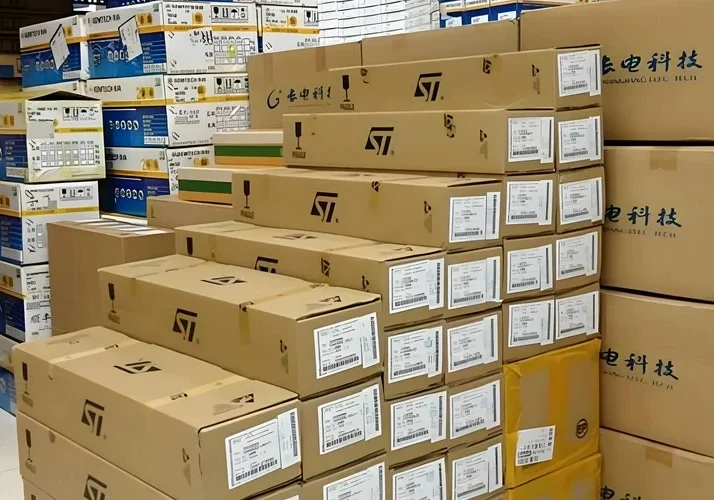
01 · VISUAL & MARKING
Part appearance
Review visible marking, package and terminal condition, labels, and visible signs of damage, corrosion or rework.
02 · PACKAGING
Quantity & traceability
Review quantity, packing format, labels, date code, moisture protection and available lot or traceability information.
03 · BASIC VERIFICATION
Component checks
Where agreed and applicable, consider basic electrical or component verification against defined acceptance criteria.
04 · DOCUMENTATION
Record consistency
Where records are available, compare the supplied labels, lot identifiers and agreed inspection findings against the offered part and order details. Confirm separately which records can actually be shared.
B · How we check it
The five methods below are available options, not a mandatory sequence or a standard package. Choose methods to suit the part and the agreed risk and acceptance criteria.
SHARED QUALITY TEAM
Visual and selected sample checks
Level 1 – Visual: The shared quality team checks visible condition, markings, date code and lot code on receipt.
Level 2 – Decapsulation: The shared quality team may open selected samples to compare the die, bond wires and lead frame with an appropriate reference when risk warrants it. Destructive testing requires advance agreement on sample quantity and disposition.
THIRD-PARTY LABORATORY
Laboratory checks when agreed
Level 3 – X-ray: An accredited third-party laboratory can examine internal structures non-destructively under an agreed scope.
Level 4 – XRF: An accredited third-party laboratory can screen material composition or surface finish. XRF alone is not a full regulatory compliance certificate.
Level 5 – Electrical and laboratory: An accredited third-party laboratory can perform an agreed functional or parametric test plan, subject to device and laboratory capability.
C · What to agree before ordering
Confirm sample quantity and use, permission for destructive work, inspection cost, lead time and acceptance criteria before ordering. No method automatically proves authenticity, application suitability or regulatory compliance; customer engineering and quality teams should agree the plan for critical projects.
DOCUMENTATION & ORDER CONFIRMATION
Confirm available documents before ordering.
A datasheet describes a product; it does not prove the history of a particular lot. Document availability depends on the confirmed source and the tests or checks actually ordered and performed.
Documents to request and confirm
Documents are provided according to the confirmed source and agreed inspection scope, not automatically with every shipment.
Technical and conformity: manufacturer datasheet and Certificate of Conformance where applicable and available.
Packaging and lot: original labels, package photographs, date or lot codes and available chain-of-custody records.
Inspection: receiving inspection findings or third-party reports for work agreed and performed.
Compliance: available RoHS or REACH declarations, identifying issuer and document scope.
Limitations: missing records or traceability gaps disclosed before order approval.
Before approving a quotation
Check each offered part and package, quantity, quoted condition, availability, delivery assumptions, documents, inspection plan and any proposed technical deviation. A replacement requires customer engineering approval.
RETURNS & QUALITY CONCERNS
How we handle quality concerns and returns.
Returns and quality concerns are reviewed case by case against the agreed order and supporting records. Email sales@semivant.com to begin the review; retain material and original packaging pending instructions.
01 · ORDER DETAILS
Submit relevant facts
Provide the order number, part number, affected quantity, packaging and label photographs, and a concise description of the issue. Retain the material and original packaging.
02 · CONDITIONS
Review within two business days
The shared quality team reviews the request within two business days and advises whether further evidence is needed.
03 · NEXT STEPS
Authorize and assess the return
If a return is approved, we provide an RMA number and shipping instructions. Returned components are checked on receipt; credit, replacement or refund is decided case by case under the applicable agreed order terms. Do not send material before authorization.
Resolution: Any credit, replacement or refund is determined case by case based on inspection findings and the applicable agreed order terms. Do not return material before receiving authorization and shipping instructions.
Start an RFQ
Have a part number, BOM or replacement requirement?
Send the reference, quantity and target delivery if known, and tell us which condition, records or inspection scope matter to your project. Final part suitability and alternative approval remain subject to customer engineering review.